Wheat, spelt, kamut, rye, barley and oat flours contain gluten. Rice, corn, buckwheat, quinoa, legume, nut and tuber flours are naturally gluten free, but FACE (the Spanish Celiac Federation) classifies them as specific products: they are only safe with a “gluten free” label or after checking the ingredients.
Here is the quick table and every flour one by one, with a photo and its risk level. If you need the basics first, start with what is gluten?.
Published on November 12, 2026 with data from FACE.
Short answer: wheat, wholemeal, spelt, kamut, rye, barley and oat flour contain gluten. Rice, corn, buckwheat, quinoa, chickpea, almond, potato or cassava flours are naturally gluten free, but in the FACE classification none is free to use: all need a “gluten free” label or a checked ingredient list.
Does flour have gluten?
It depends on which grain is milled. When people say just “flour”, they mean wheat flour, and that does contain gluten. FACE classifies as not safe the flour, starches and semolina of wheat, barley, rye, triticale and oats.
Gluten is not about being flour, but about the cereal it comes from. That is why some flours contain gluten and others do not.
Which flours are gluten free?
Naturally gluten free flours include rice, corn, millet, sorghum, buckwheat, quinoa, amaranth and teff flour; nut flours such as almond; legume flours such as chickpea or soy; and tuber flours such as potato, cassava and tapioca.
Buckwheat is not wheat, despite the name. Spelt and kamut, on the other hand, are wheat and are not safe. For each cereal in detail, see the list of gluten free cereals.
Why check the label even for rice flour?
Because in the FACE classification, gluten free flours from allowed cereals, and nut, legume and tuber flours, are specific products: they can be contaminated by contact with gluten during production, so they depend on each manufacturer.
In the European Union, “gluten free” on a label means less than 20 ppm of gluten, under Regulation 828/2014. That label is the guarantee you are looking for.
Do wholemeal and rye flour have gluten?
Yes. Wholemeal flour is wheat flour with the bran, so it contains gluten, and rye flour does too. Wholemeal does not mean “healthier for celiacs”: it means the whole grain has been milled.
For more detail, see rye and barley and spelt.
Quick table
| Flour | Does it have gluten? | What FACE says |
|---|---|---|
| Wheat flour (strong, pastry, wholemeal) | Yes | A wheat derivative: not safe. |
| Spelt and kamut | Yes | They are types of wheat: derivatives are not safe. |
| Rye, barley and triticale | Yes | Not safe according to FACE. |
| Oats | Yes (per FACE) | Not safe in the FACE classification. Oats labelled “gluten free” are a separate case: see the guide. |
| Semolina | Yes, if made from wheat | A wheat derivative: not safe. |
| Rice, corn, millet, sorghum, buckwheat, quinoa, amaranth, teff | Not by nature | Gluten free flours from allowed cereals: only with a “gluten free” label or a checked ingredient list. |
| Almond and other nuts | Not by nature | Nut flours: a specific product, check the label. |
| Chickpea, soy and other legumes | Not by nature | Legume flours: a specific product, check the label. |
| Potato, cassava and tapioca | Not by nature | Tuber flours: a specific product, check the label. |
The list, one by one
This is the photo list of the most common flours, from those that are naturally gluten free to those that contain gluten. Each card has its level: amber if the label must be checked and red if it contains gluten.
Naturally gluten free: only with a “gluten free” label
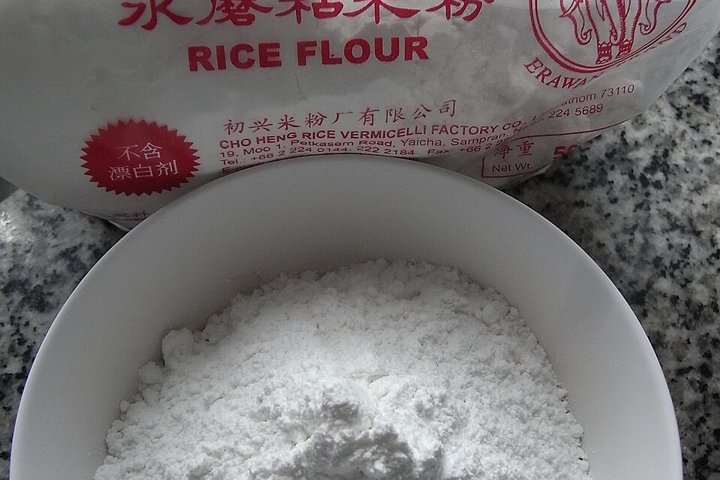
Rice flour
Gluten free flour from an allowed cereal.
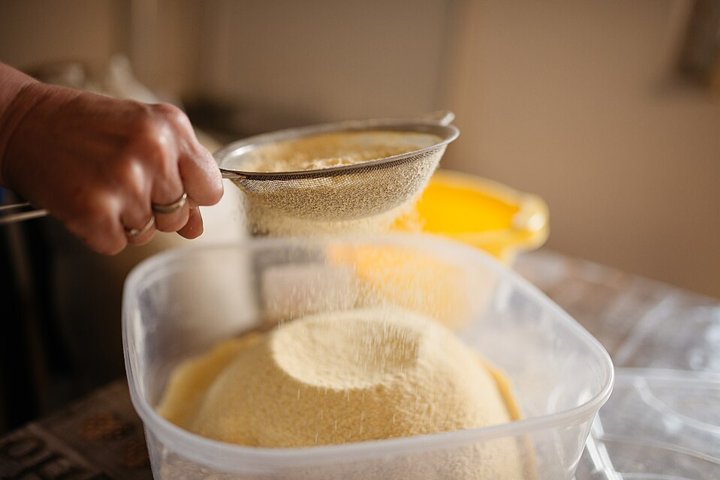
Corn flour
Corn flour and cornstarch, with the label.

Buckwheat flour
It is not wheat, despite the name.
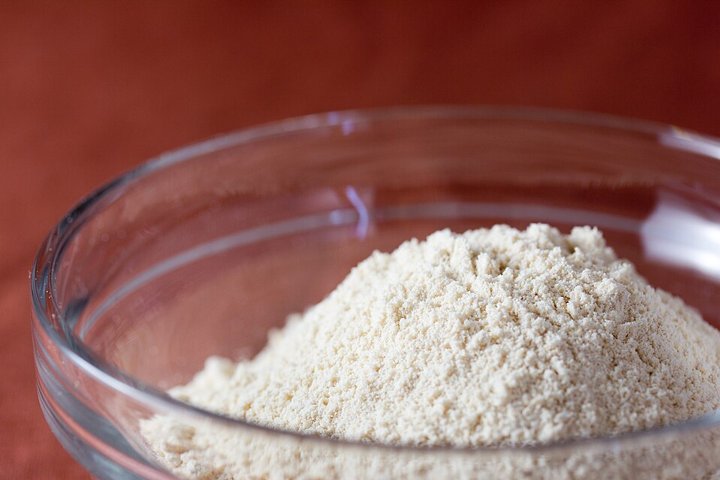
Soy flour
A legume flour.

Potato flour and starch
A tuber flour.
Contain gluten

Wheat flour
The everyday kind, strong or pastry.
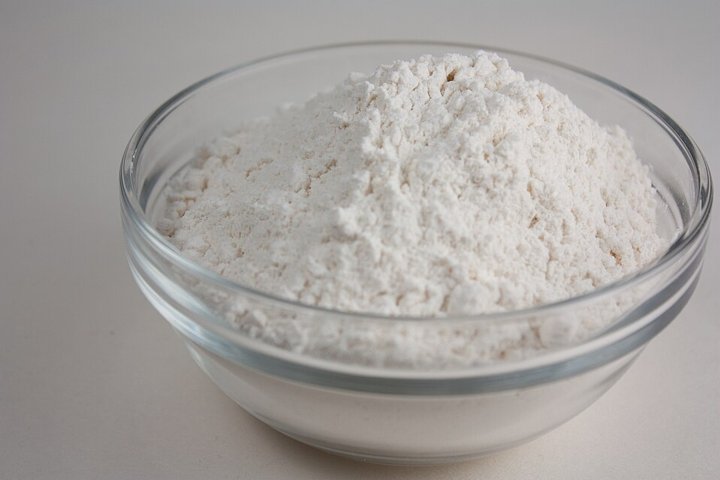
Wholemeal flour
Wholewheat flour.
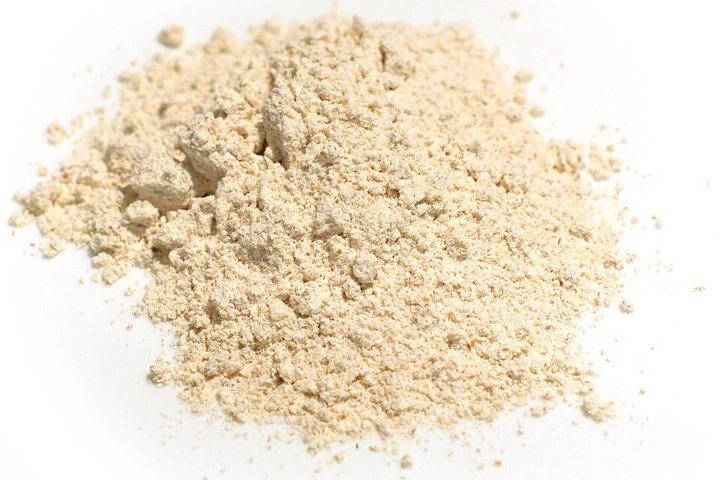
Spelt flour
Spelt is a type of wheat.

Kamut flour
Kamut is an ancient wheat.
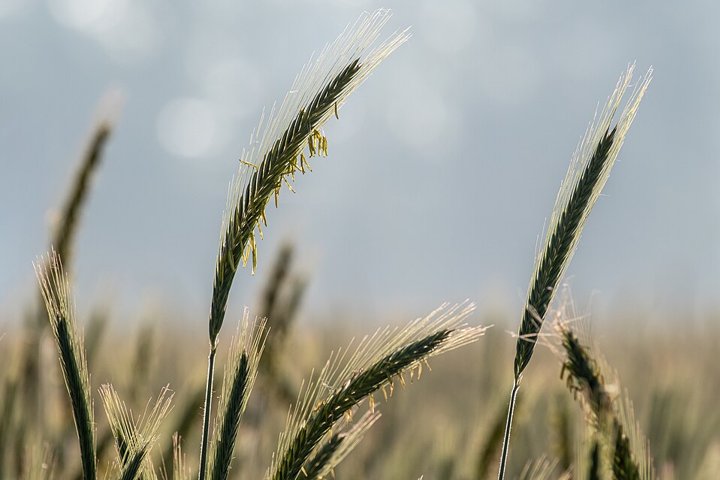
Rye flour
Contains gluten.
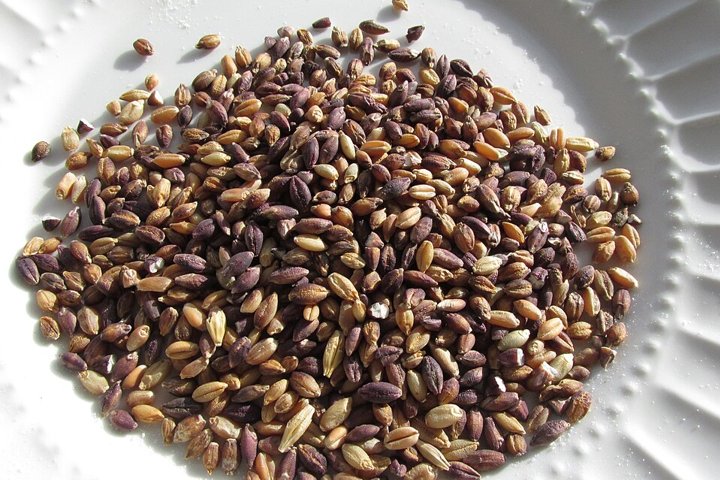
Barley flour
Contains gluten.

Oat flour
FACE classifies it as not safe.
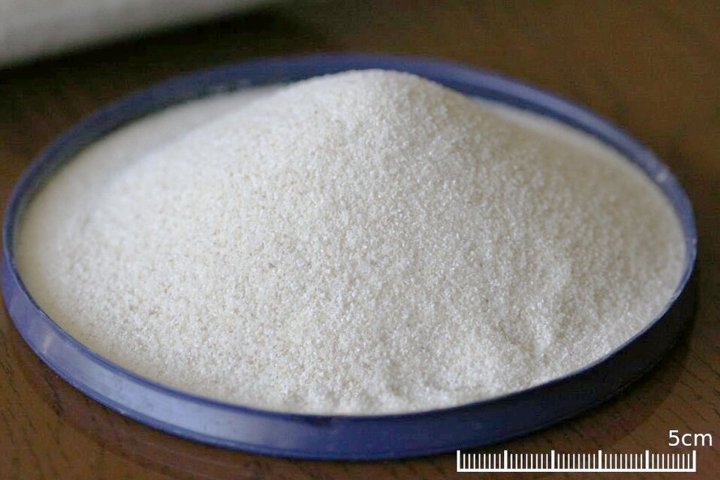
Wheat semolina
A wheat derivative.
How do you choose a gluten free flour?
To choose a gluten free flour, follow this order:
- Look for the “gluten free” mention on the pack, even on rice, corn or legume flours.
- Check the ingredients for wheat, rye, barley, oats or malt.
- Be wary of plain “flour” or “cereal flour”: it is usually wheat.
- Watch out for mixes and baking blends: check the label.
- If in doubt, leave it out. That is the FACE rule.
To put it into practice, see gluten free bread and gluten free desserts. To see every food by category, read which foods contain gluten.
Eating gluten free in Valencia
At Gato Blanco the whole kitchen is 100% gluten free. It is certified by ACECOVA and we hold the FACE Gluten Free Restaurant seal for 2025 and 2026, so you do not need to ask dish by dish.
We have written allergen information for every dish: gluten free covers gluten, and in the kitchen we also work with dairy, eggs and nuts. If you have another allergy, ask us and we will show you the information for each dish.
We are a gluten free restaurant in Valencia in La Zaidía, a 7-minute walk from the Serranos Towers, and an option for anyone looking for a restaurant for celiacs in Valencia with a fully safe menu. You can see all the dishes on the gluten free menu.
Frequently asked questions
Which flours are gluten free?
Rice, corn, buckwheat, quinoa, millet, sorghum, amaranth and teff flours, plus almond, chickpea, soy, potato and cassava flours, are naturally gluten free. According to FACE, all are specific products and need a “gluten free” label or a checked ingredient list.
Does flour have gluten?
Wheat flour, the usual one, does. So do wholemeal, spelt, kamut, rye, barley and, according to FACE, oat flour. Flours from other sources are naturally gluten free.
Is there gluten free flour?
Yes. There are rice, corn, buckwheat, chickpea, almond or potato flours, and ready-made mixes. Always look for the “gluten free” mention on the pack.
Does wholemeal flour have gluten?
Yes. Wholemeal flour is wheat flour with the bran, so it contains gluten and is not safe for celiacs.
Does rye flour have gluten?
Yes. Rye is one of the cereals with gluten, along with wheat, barley and, according to FACE, oats.
Is rice flour gluten free?
Rice is naturally gluten free, but rice flour is a specific product in the FACE classification: it is only safe with a “gluten free” label or after checking the ingredients.
Which flours can celiacs eat?
Gluten free flours from allowed cereals, such as rice or corn, and nut, legume and tuber flours, always with the “gluten free” mention or a checked label. Wheat, spelt, kamut, rye, barley and oat flours are out.
Does oat flour have gluten?
FACE classifies it as not safe, together with wheat, barley and rye. Oats labelled “gluten free” are a separate case, explained in the oats guide.
Photo credits
Photographs from Wikimedia Commons, with the licences shown: Rice flour: Ocomejessian, CC BY-SA 3.0; Corn flour: Shixart1985, CC BY 2.0; Buckwheat flour: Veganbaking.net from USA, CC BY-SA 2.0; Soy flour: Veganbaking.net from USA, CC BY-SA 2.0; Potato flour and starch: Jon Pallbo (Jon.Pallbo@gmail.com), PUBLIC DOMAIN; Wheat flour: Ajumeoni, CC0; Wholemeal flour: Veganbaking.net from USA, CC BY-SA 2.0; Spelt flour: Basotxerri, CC BY-SA 4.0; Kamut flour: Forest and Kim Starr, CC BY 3.0 US; Rye flour: Dietmar Rabich, CC BY-SA 4.0; Barley flour: Forest and Kim Starr, CC BY 3.0 US; Oat flour: Roger Culos, CC BY-SA 3.0; Wheat semolina: Sanjay ach, CC BY-SA 3.0.
Source: FACE (classification of foods suitable for celiac people, 2021) and Regulation (EU) 828/2014.